


The Pursuit of Truth
Can the aggregate of neurons we call the brain know what Truth is?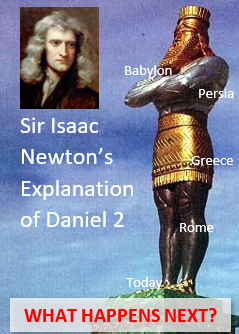
What Sir Isaac Newton had to say about one of the most iconic prophecies of the Bible
God doesn't make sense, unless...
5 considerations that help get God off the hook.
Evidences for God
4 evidences that God exists.
The ancient book
Of what relevance is this book in the 21st century?Answers to objections
Religious liberty
The history of religious intolerance is drenched in the blood of those who stood for what they believed.Keys to Truth
To know Truth, there are essentials without which we can be easily misled.The creation-evolution controversy: a call for fairness
A Tiny Dot of Significance
How rock-solid value and meaning are possibleThe Bible Sabbath
Why is there something instead of nothing? If there is a God, why is there so much suffering?
The fact / opinion myth: have you bought into it?
What is faith?
Thoughts
Links
Secrets To Uncovering Truth
Determine to earnestly seek truth above everything else.
Truth comes at a cost. Are we willing to believe and to live by the truth even if it may cost our comfort, our reputation, or even our lives? If truth exists that is disagreeable to us, would we recognize it as truth, or would we shrug it off because it might cost us something we hold more dear than truth itself?
Live according to the truth you already understand.
Knowing the truth and living by the truth go hand in hand. We need to live according to the truth we already understand and to resolve to follow the path of duty as revealed in further truth that opens to our understanding. It is part of the human psyche (we believe God given) that we are uncomfortable living contrary to what we believe to be the truth, and we will either seek to amend our lives, or we will - at least to some degree - close our minds to the truth in order to reduce this tension. Those who love the truth, will seek to do the former.
Be honest.
Slander, misrepresentation, concealing of evidence, etc. have no place in the search and promotion of truth.
A common mistake we humans often make is to see the invalidity of certain arguments that we have used to defend a position, but then because not all of our objections to the converse position have been answered, we either forget about the fact, or deliberately choose to use the very same invalidated objections at our next opportunity. Thus, whether or not our position is right or wrong, we are no wiser than we were before, and we end up arguing in circles. This propensity is suitable for the careless and for the unscrupulous, but not for those seeking and promoting the truth. Truth does not need to be buttressed with falsehood. Those in the pursuit of truth must learn to be consistently honest with themselves and with others.
Don't be ashamed to favor purpose.
In the analysis of evidence, many feel that we should divorce from consideration all thought of how any interpretation of the evidence may affect ones worldview. It is assumed that this will result in a more objective study and thus will be more effective in the pursuit of truth.
The desirability and even the honest feasibility of this approach is questionable. The desirability because what we believe on certain issues can greatly impact how we view ourselves and our relationship to the world - and universe - around us, and can potentially have a disastrous impact on our view of the significance of our own lives and the lives of others.
The feasibility of such an approach is questionable because of the innate difficulty or impossibility of humans to be entirely objective. When humans think they are being entirely objective, that is likely when they are the most unconscious of the personal biases that factor into their conclusions. Being forthright about our biases enables us to be more objective than if we are not.
We submit that the bias in favor of a purpose behind our universe is a good one, and further, that no investigator should be faulted for this bias if honestly attempting to be just as candid with the difficulties as with the strengths of the evidence as it pertains to this bias. An honest admission of this or of any bias serves as a flag to alert the conscientious seeker to pay even closer attention to evidence that might otherwise escape notice because it doesn't seem to fit expectations.
Earnestly study the Bible for yourself.
If you are not a Christian, this last point will seem totally irrelevant. However, if in your quest for truth you sense that perhaps there is a God and He is urging you to give the Bible another (or first time) look, we strongly encourage you to do so.
Some feel a need to set immediately to the task of determining whether or not the Bible is 100% trustworthy; however we discourage this approach. Study the Bible to find truth, and then accept the truth that is thereby made plain. There may be things that you may feel to be not true or contradictory. It is not our intention here to discuss whether or not there may be minor discrepancies in the Bible. However, we have found that as we persist in our study of the Bible, many apparent contradictions resolve themselves and we have become more and more amazed by the harmony within its pages. We have confidence in the Bible as God's Word because God has been revealed to us through its study.
Page last modified: 2025.12.08
The Pursuit of Truth
Can the aggregate of neurons we call the brain know what Truth is?What Sir Isaac Newton had to say about one of the most iconic prophecies of the Bible
God doesn't make sense, unless...
5 considerations that help get God off the hook.Evidences for God
4 evidences that God exists.